

Affiliate disclosure: This page contains selected booking links. We may earn a commission from an eligible purchase at no additional cost to you. How affiliate links work.
Quick answer: Magome-juku is a preserved Nakasendo post town in Gifu Prefecture and the usual starting point for the walk to Tsumago. The one-way trail is about 8.8 km and takes roughly three hours without long stops. Start early, send large luggage ahead and allow extra time for waterfalls, tea houses and photographs.
2026 transport update: In addition to access via Nakatsugawa Station, a seasonal bus connects Takayama, Gero and Magome between April 1 and November 30, 2026. Schedules are seasonal, so verify the return connection before beginning the hike.
Planning more than the classic walk? Our Nakasendo beyond Magome guide compares the Yogawa Path, Nojiri–Nagiso, Kiso-Fukushima and Narai, with realistic car-free itineraries.
Nestled in the mountains of Gifu Prefecture, Magome-juku (馬籠宿) is one of the most picturesque post towns along the historic Nakasendo Way. This was the ancient route connecting Tokyo (Edo) and Kyoto during Japan’s Edo period.
Once one of sixty-nine post towns providing rest for weary travelers, Magome-juku offered lodging, meals, and entertainment to samurai, merchants, and pilgrims. They made the long journey between the shogun’s capital and the imperial city.
Unlike other towns on the route, Magome is famous for its steep, stone-paved streets that wind dramatically up the hillside. Horses couldn’t climb the incline, so travelers had to leave them behind. This origin is reflected in its name: Magome, written with the kanji for “horse” (馬) and “basket” (籠).
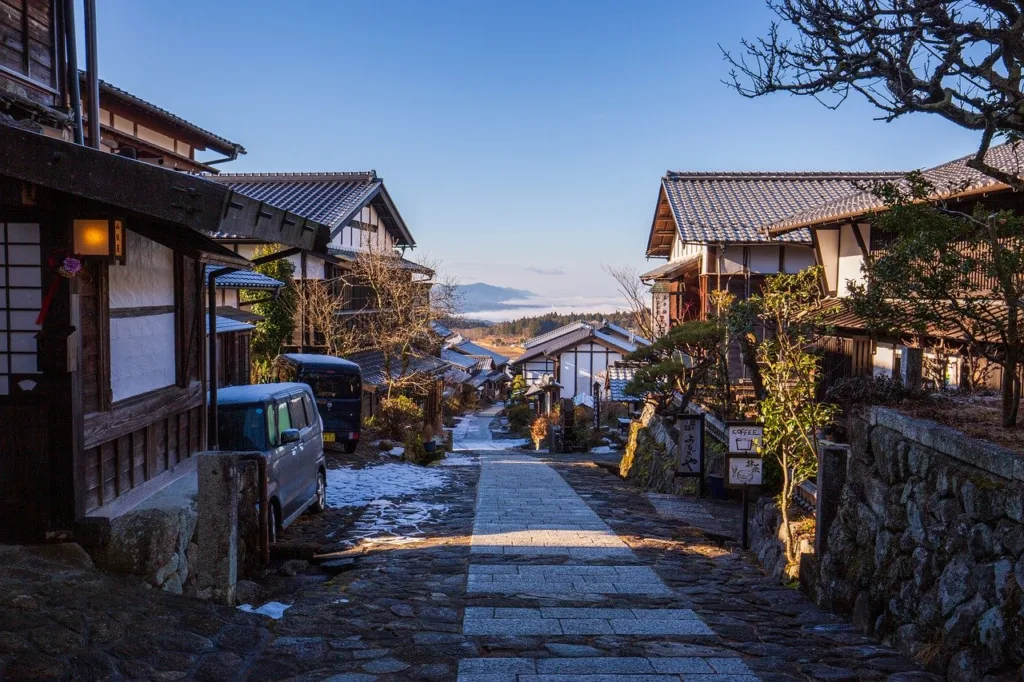
As you stroll the cobblestone lanes today, you’ll pass beautifully preserved Edo-era houses, traditional inns (ryokan), and tea houses. You will also see museums and souvenir shops, each telling stories of Japan’s travel culture centuries ago. The sound of trickling water channels and the scent of roasted chestnuts add to the charm, creating a time-travel experience unlike anywhere else.
✨ Don’t miss:
- The Toson Memorial Museum, dedicated to novelist Shimazaki Toson, who was born here.
- Panoramic views of the Kiso Valley and surrounding mountains.
- The scenic hike from Magome to Tsumago, a well-preserved trail that lets you walk in the footsteps of Edo-period travelers.
📍 Location: Magome-juku, Nakatsugawa City, Gifu Prefecture, Japan
🚶♀️ Best for: Culture lovers, history enthusiasts, and hikers exploring the Nakasendo Way
📅 Tip: Visit in autumn for stunning foliage or spring for cherry blossoms along the mountain paths.

Website: https://www.kiso-tajimaya.com/around/index.html?cnt_selectcatno=002&lang=e
Find the perfect accommodation for your Nakasendo Way adventure! Whether you’re looking for a traditional ryokan or modern hotel, we’ve got you covered.
This post contains affiliate links. If you book through our links, we may earn a commission at no extra cost to you. This helps us keep creating helpful travel content for you!
Continue planning the Nakasendo route
Magome fits naturally into our 10-day hidden Japan itinerary. For more historic towns, family stops and train-friendly ideas, visit the Hidden Japan trip-planning hub.
Build Magome into your Japan route
Walking in October or November? Compare the trail with our Japan in autumn guide beyond Kyoto. Families can also use our Japan Alps with kids guide to connect Magome with a slower mountain itinerary.
Magome or Tsumago—and Which Direction?
Choose Magome for the steeper preserved street and straightforward start to the best-known walk. Choose Tsumago when the quieter post-town atmosphere matters more than beginning at the most recognizable approach. The correct walking direction depends on your accommodation, bus connections, luggage plan and comfort with the route's gradients—not a universal rule.
Decisions to settle in advance
- Day trip or overnight: an overnight protects the walk from becoming a race against rural connections.
- Luggage: confirm current forwarding dates, acceptance times, size rules and collection points; do not assume a seasonal service is running.
- Footwear: use shoes suitable for stone, dirt, wet leaves and uneven trail rather than city-only footwear.
- Weather: check rain, heat, snow or ice and trail notices close to the day.
- Routing: Nagoya is the most natural major gateway. Kyoto and Tokyo starts add enough travel that a same-day out-and-back needs careful timetable work.
When time is limited, visiting one post town well is better than forcing the full walk without a safe transport margin.