
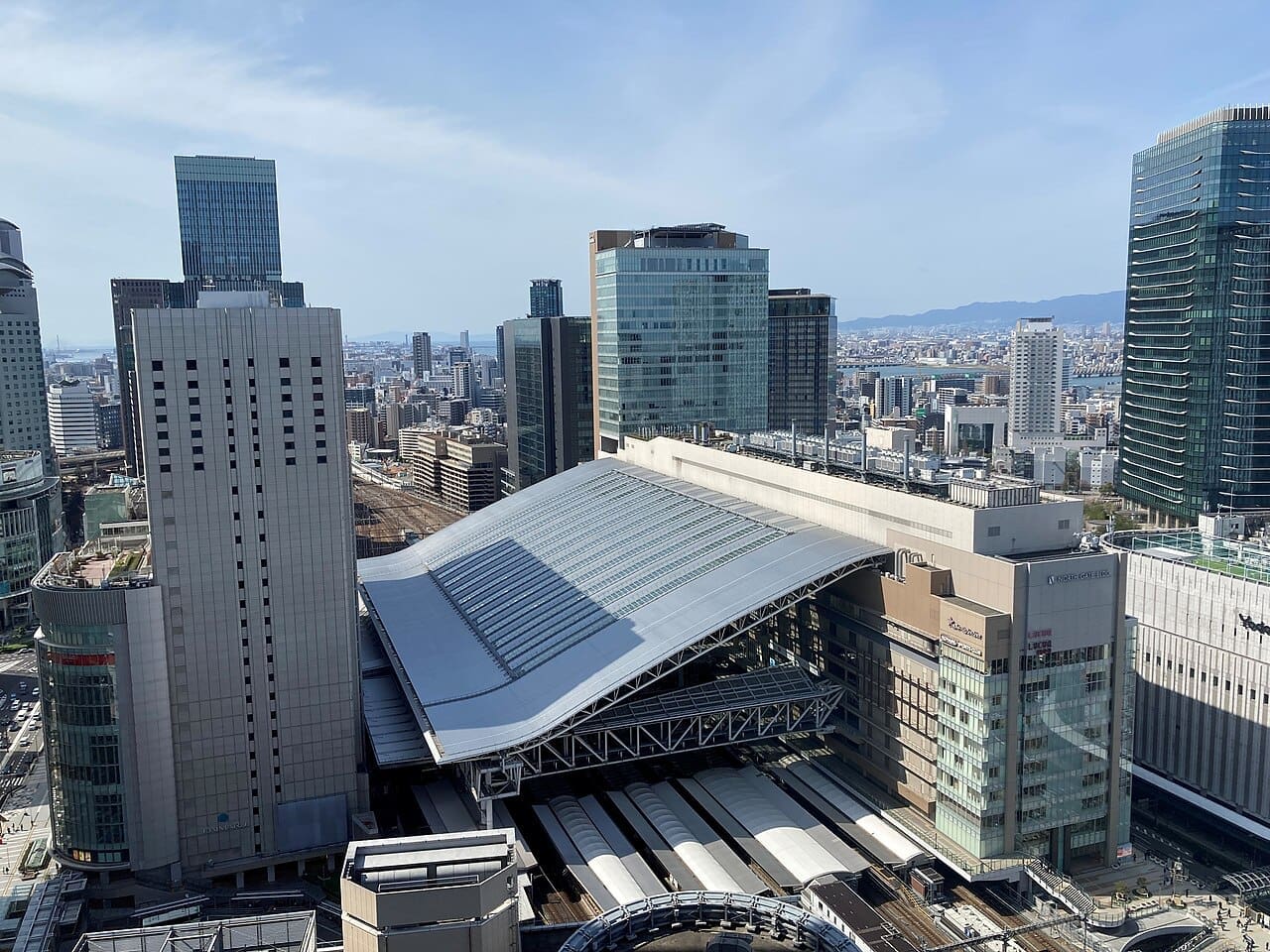
Short answer: Osaka is a good single base for Kyoto and Nara if you dislike changing hotels, want Osaka’s food and nightlife, and plan only one focused Kyoto day plus a Nara day trip. Split the stay when Kyoto deserves two or three full days, you want early mornings and quieter evenings there, or your Osaka hotel adds a long local journey before the intercity train even begins.
Nara usually remains a day trip. Kyoto is the real decision.
Last verified: September 16, 2026
At a glance
| Your trip | Better choice | Why |
|---|---|---|
| One Kyoto day, one Nara day, several Osaka evenings | Stay in Osaka | A hotel move would save little and cost packing time. |
| Two or three full Kyoto sightseeing days | Split Osaka and Kyoto | Repeated hotel-to-attraction travel becomes tiring. |
| Early Higashiyama, Fushimi Inari, or Arashiyama priorities | Stay in Kyoto | You can start before most Osaka day-trippers arrive. |
| Nightlife and late food are the priority | Stay in Osaka | You finish near your hotel instead of watching the return-train clock. |
| Family with luggage and one hotel strongly preferred | Usually Osaka | Fewer check-ins may outweigh commute time; choose the station carefully. |
| Nine nights with Osaka, Kyoto, Nara, and Minoh | Usually split | Nine nights justify several Kyoto nights unless Osaka is clearly the main event. |
The mistake: timing only station to station
“Osaka to Kyoto takes about half an hour” can be true for the fastest central-station segment and still be misleading for your day. Your real journey is:
- hotel to an Osaka departure station
- finding the correct platform and waiting
- the intercity train
- any transfer in Kyoto
- the final bus, train, or walk to the attraction
A hotel near Osaka Station traveling to Kyoto Station is a different proposition from a hotel in Shimanouchi traveling to Kiyomizudera. Shimanouchi is convenient for Namba and late evenings, but it normally adds a subway or walk before the Kyoto train and another cross-city leg after arrival.
For planning, price the whole door-to-door movement in both directions. A nominal 30-minute train can become 70–100 minutes from hotel door to temple gate, depending on the base, route, wait, and Kyoto destination.
What the main routes actually solve
| Osaka side | Useful line | Kyoto/Nara side | Best for |
|---|---|---|---|
| Osaka/Umeda | JR Kyoto Line | Kyoto Station | Kyoto Station, Fushimi Inari connection, Arashiyama connection, Shinkansen area |
| Osaka-Umeda | Hankyu Kyoto Line | Kyoto-Kawaramachi | Downtown Kyoto, Nishiki, Gion edge |
| Yodoyabashi/Kitahama | Keihan Main Line | Gion-Shijo, Kiyomizu-Gojo, Fushimi area | Eastern Kyoto and Fushimi |
| Osaka-Namba | Kintetsu Nara Line | Kintetsu-Nara | Nara Park and the eastern temple zone |
| JR Namba/Tennoji | JR Yamatoji Line | JR Nara | Naramachi and travelers already using JR |
The best railway is the one that matches both your hotel and the day’s first sight. Do not travel to Shin-Osaka merely because it is famous: the Shinkansen is rarely the sensible everyday commute between central Osaka and Kyoto.
When Osaka works well as one base
You want Osaka evenings
Staying near Namba, Umeda, Tenma, or another food district lets the day end naturally. There is no final intercity leg after dinner, and a late start the next morning is less frustrating if nightlife is one of the trip’s priorities.
Kyoto is only one focused day
One well-designed Kyoto day can justify commuting. Choose one geographic cluster rather than collecting distant icons. Eastern Kyoto pairs more naturally with a Keihan arrival; Downtown with Hankyu; Kyoto Station, Fushimi Inari, or onward JR routes with the JR corridor.
You strongly dislike moving hotels
A hotel change consumes more than the train ride: packing, checkout, storing luggage, retrieving it, traveling, and waiting for the next room. For a short stay, avoiding that friction can be worth two commutes.
Nara is a day trip
Central Nara is straightforward from Osaka, particularly from the Namba side. Kintetsu-Nara is closer to Nara Park than JR Nara, although the right choice depends on the hotel and any rail pass. Most first-time visitors do not need to move hotels to see Nara.
When to split Osaka and Kyoto
Kyoto has two or three full days
Two return commutes are no longer a one-off convenience; they become a repeated tax on the trip. A Kyoto stay lets you group eastern, western, southern, and central sights without beginning each day in another city. Our Kyoto neighborhood guide compares practical bases by route rather than atmosphere alone.
Early morning matters
Kyoto’s most famous areas are not empty at dawn, but staying locally makes an early start realistic. From Osaka, a 7:00 a.m. arrival at the first sight may mean leaving the hotel well before 6:00. That can undermine the relaxed Osaka evening you chose the base for.
You want a Kyoto evening
After day visitors leave, Kyoto offers river walks, small bars, neighborhood restaurants, illuminated seasonal events, and the simple pleasure of not rushing for a train. The value is not only shorter transport; it is experiencing a different rhythm.
Your Osaka hotel is poorly placed for the route
A cheap room can be expensive in time. If it requires a local train to Namba, another to Umeda, and then an intercity service, the inconvenience repeats every morning and night. Either choose a base on the correct corridor or split the stay.
Should you stay overnight in Nara?
For most first-time Kansai itineraries, no. Nara works well as a day trip from either Osaka or Kyoto, and the central sights fit a focused day. Stay overnight when early temple time, Naramachi after day-trippers leave, a slower pace, or an excursion beyond Nara Park is itself a priority.
JNTO notes that Nara is easily reached from both Osaka and Kyoto. Its Kansai itinerary also treats Kyoto, Nara, and Osaka as a natural sequence, but that does not mean each city requires a hotel change.
What about Minoh?
Minoh is on the Osaka side of the region and reinforces Osaka as a useful base. It does not, however, cancel the cost of repeated Kyoto commutes. For a nine-night plan that includes Osaka, Kyoto, Nara, and Minoh, a practical split is often five or six Osaka nights and three or four Kyoto nights, adjusted for flight dates and priorities.
Use Osaka nights for Nara, Minoh, central Osaka, and late food. Use Kyoto nights for two or three geographically grouped Kyoto days. This reduces hotel changes to one while preserving the main benefit of both cities.
Three workable sample plans
Five nights: keep one Osaka base
- Day 1: arrive and eat near the hotel
- Day 2: central Osaka
- Day 3: one focused Kyoto day
- Day 4: Nara
- Day 5: Osaka or Minoh
This is the strongest case for one base. A Kyoto hotel move would consume too much of a short stay.
Seven nights: decide from Kyoto priorities
Keep all seven nights in Osaka if Kyoto is one day and Osaka evenings are central to the trip. Split four Osaka and three Kyoto if you want eastern Kyoto, Arashiyama, and Fushimi Inari without compressing them.
Nine nights: a split usually wins
For nine nights around Osaka, Kyoto, Nara, and Minoh, consider five Osaka nights and four Kyoto nights. Nara and Minoh remain day trips from Osaka. The Kyoto stay supports two or three full sightseeing days plus an arrival or departure half-day.
This is consistent with the site’s realistic first-time Japan itinerary, which treats repeated Kyoto–Osaka commuting as a real trade-off rather than a free shortcut.
Where to stay in Osaka if you plan day trips
Umeda/Osaka Station
Best for frequent JR travel to Kyoto and useful for city transport. It is the clearest choice if Kyoto Station is your main gateway.
Namba
Best for Nara via Kintetsu and for Osaka nightlife. Kyoto is still practical, but often requires reaching another departure corridor or using the Hankyu/Keihan networks after a local transfer.
Yodoyabashi or Kitahama
Strong for the Keihan line toward Fushimi and eastern Kyoto, with a calmer business-district feel than Namba. This can be a smarter specialist base than choosing the most famous station name.
Shin-Osaka
Useful for long-distance Shinkansen departures and early transfers. It is less compelling for nightlife and does not automatically simplify the parts of Kyoto far from Kyoto Station.
A decision checklist
- Count full Kyoto days, not Kyoto items on a list.
- Map the hotel to the actual first attraction.
- Add the local journey at both ends of the intercity train.
- Decide whether early Kyoto or late Osaka matters more.
- Keep Nara as a day trip unless an overnight is a deliberate experience.
- Compare one hotel move with two or three round trips.
- Check the final train only after choosing the dinner neighborhood.
- Do not use station-to-station time as the day’s total transport budget.
Frequently asked questions
Can I stay in Osaka and visit Kyoto every day?
You can, but “possible” is not always efficient. One Kyoto day is easy to justify; two or three full days often make a split stay more enjoyable.
Is Osaka or Kyoto a better base for Nara?
Both work. Osaka-Namba has particularly convenient Kintetsu access to Kintetsu-Nara, while Kyoto is useful if Nara sits between Kyoto sightseeing days.
How long does Osaka to Kyoto really take?
The fastest central-station train segment can be around half an hour, but door-to-door travel commonly takes much longer. Add hotel access, waiting, transfers, and the final journey to the attraction.
Should I stay near Osaka Station or Namba?
Choose Osaka/Umeda for repeated JR trips to Kyoto. Choose Namba for Nara access and late food around Minami. Choose the route you will repeat, not the area with the loudest recommendation.
Is Kyoto worth staying overnight?
Yes when you have two or more days, value early starts, or want Kyoto evenings. For one focused day, an Osaka base may be simpler.
Should I move hotels for Nara?
Usually not. Stay overnight only if Nara’s quieter morning/evening atmosphere or sights beyond the standard park circuit are a priority.
Can I day-trip to Minoh from Osaka?
Yes. Minoh is naturally paired with an Osaka base, subject to current trail, weather, and transport conditions.
For late arrivals in Osaka, Kyoto, or Nara, check the specific venue in the Japan Attraction Closing-Time & Last-Entry Checker. It separates closing time from verified admission cutoffs and flags dates that still require the operator’s calendar.
Sources and useful official links
- JNTO — the Kansai Trio — official regional itinerary and door-to-door examples
- JNTO — Nara — access from both Osaka and Kyoto
- JR West — current JR routes and service information
- Hankyu Railway — Osaka–Kyoto corridor information
- Keihan Railway — access to Fushimi and eastern Kyoto
- Kintetsu Railway — Osaka–Nara route information