
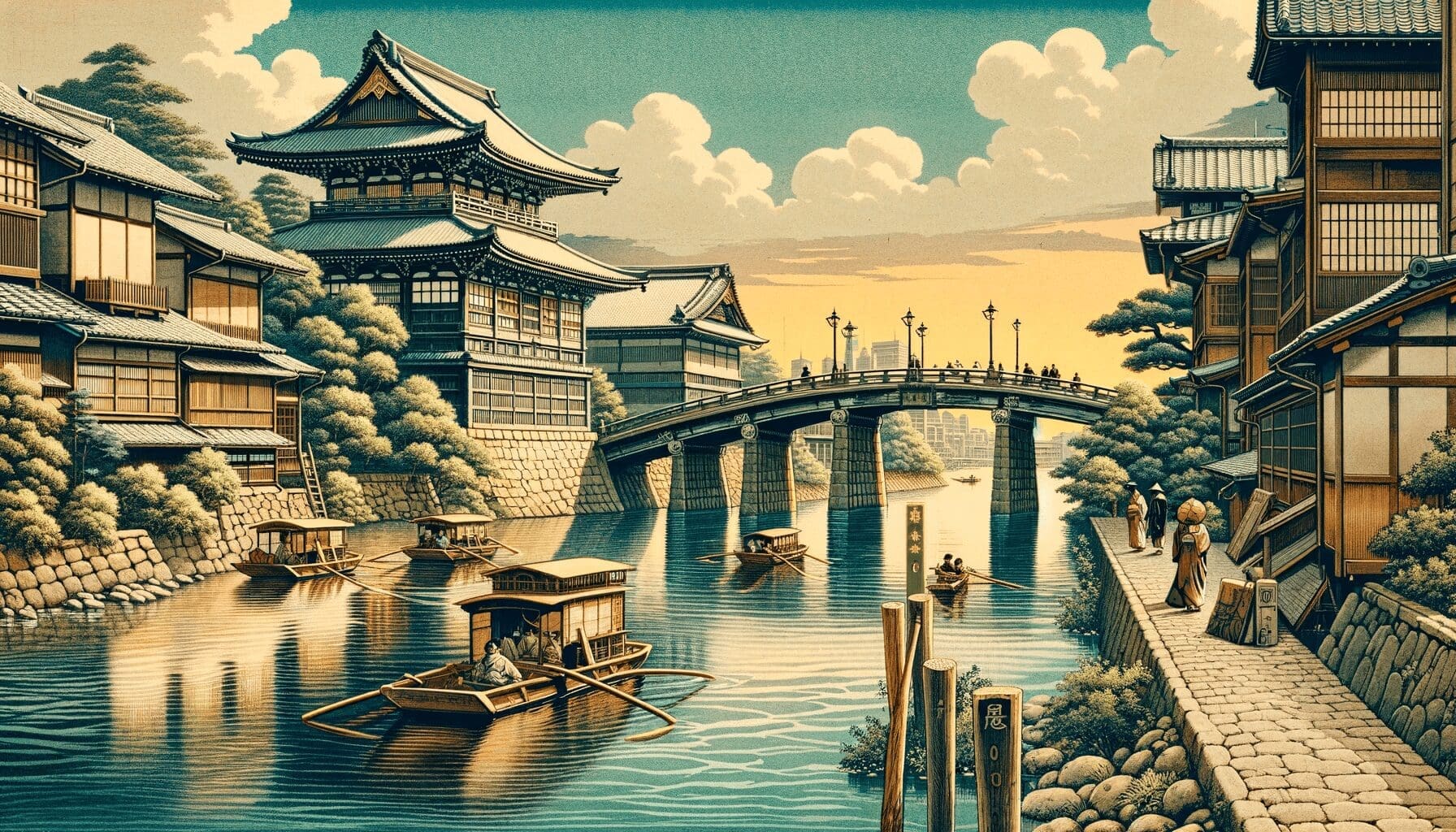
When most travelers think of Tokyo, neon-lit Shibuya or the serenity of Asakusa often comes to mind. But tucked into the very heart of the city lies Nihonbashi (日本橋), a bridge that quietly carries the weight of centuries. Known as “Kilometer Zero”, it’s here that all roads in Japan officially begin—a symbolic anchor of the nation’s past, present, and future.

A Bridge Born in the Edo Period
Built in 1603, when Tokyo was still Edo, Nihonbashi quickly became a vital artery. It marked the starting point of the Five Routes (Gokaidō), the highways that connected Edo with the rest of Japan. Merchants, samurai, and travelers alike crossed this bridge, making it the epicenter of trade, culture, and movement.
Standing here, you’re literally on the spot where Japan’s great journeys began.
From Wood to Stone: Transformation Over Time
The Nihonbashi you see today isn’t the original wooden structure but the stone bridge built in 1911, adorned with Western-inspired sculptures of lions and mythical kirin. Its design reflects the Meiji Era’s openness to global influence while keeping the soul of Edo alive.
And yet, despite its majesty, an overhead expressway (built for the 1964 Tokyo Olympics) looms above, dimming its presence. The good news? Plans are underway to move the expressway underground, restoring Nihonbashi to its rightful glory.

Nihonbashi Today: Where Tradition Meets Modern Tokyo
Exploring the area around the bridge feels like walking through a living museum:
🏮 Historic shops like Nihonbashi Mitsukoshi, which began as a kimono store in the 17th century, still thrive—now blending heritage with luxury retail.
🍣 Culinary gems abound: from centuries-old sushi restaurants to modern cafes that reinterpret Japanese flavors.
🎭 Cultural heritage sits side-by-side with skyscrapers, symbolizing Tokyo’s constant dance between innovation and tradition.
Culinary Highlights: The Flavors of Nihonbashi
This area is a paradise for food lovers. You can taste:
- Traditional Edo-style sushi in shops that have been perfecting their craft for generations.
- Seasonal delicacies that once sustained Edo merchants and travelers.
- Modern creations that speak to Tokyo’s never-ending culinary reinvention.
👉 Pro tip: Visit in the evening when the waters beneath the bridge catch the glow of sunset—it’s a photographer’s dream.

Why Nihonbashi Matters
For me, standing on Nihonbashi wasn’t just about sightseeing. It was about feeling connected to everyone who crossed this bridge before me: the travelers heading to Kyoto, the merchants carrying Edo’s lifeblood, the modern commuters walking to work.
It reminded me that while Tokyo has transformed into a global megacity, its heart still beats on this humble bridge.

Final Thoughts: Kilometer Zero, Infinite Stories
Nihonbashi is more than a bridge. It’s Tokyo’s Kilometer Zero, the place where Japan’s roads converge and where its stories begin.
Whether you come for its history, its architecture, or its blend of old and new, Nihonbashi invites you to pause, stand at the symbolic center of Japan, and feel the hum of centuries beneath your feet.
Because here in Nihonbashi, the past, present, and future don’t just meet—they flow together like the waters beneath the bridge.