
Affiliate disclosure: This page contains selected booking links. We may earn a commission from an eligible purchase at no additional cost to you. How affiliate links work.
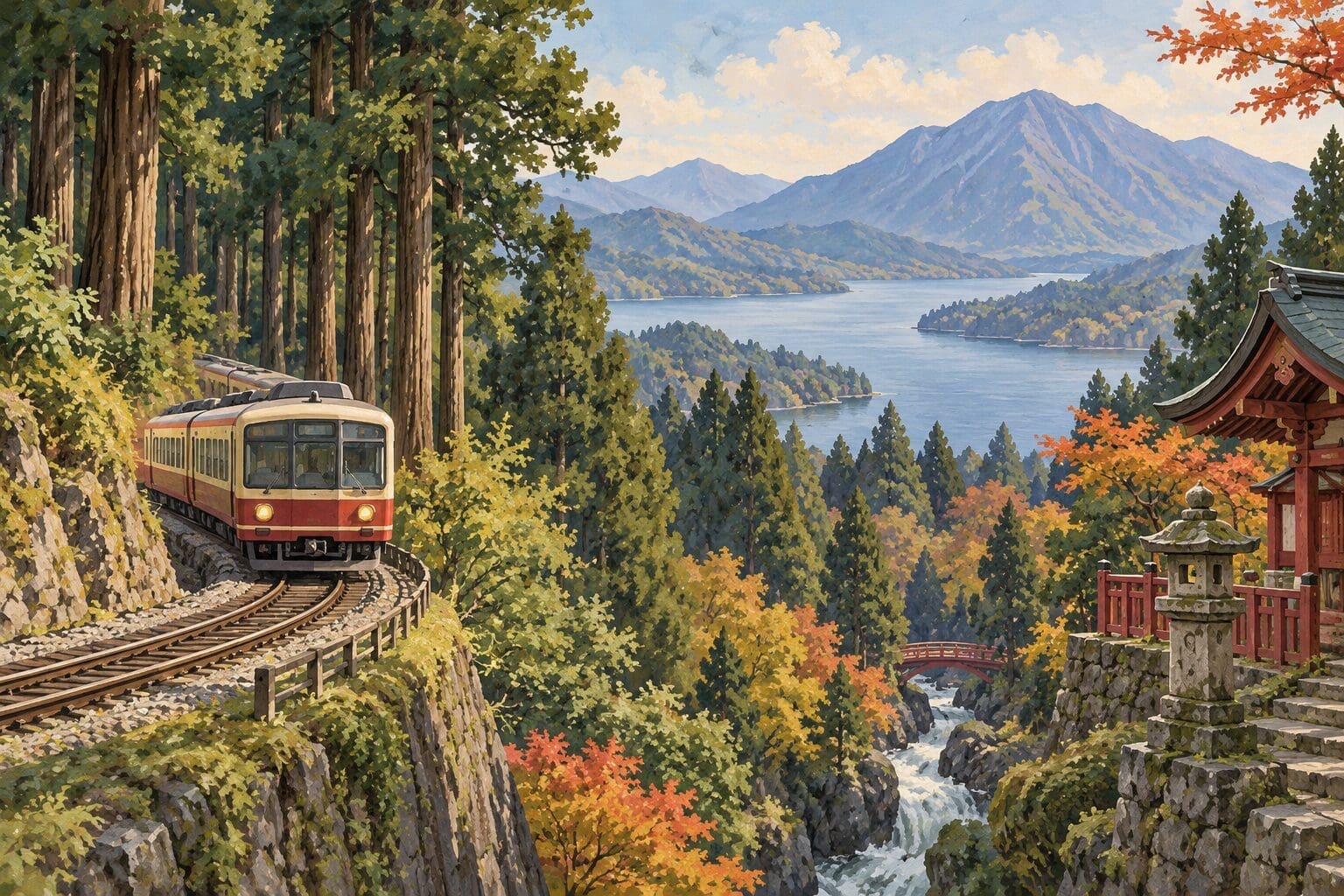
AI-generated conceptual illustration; not a photograph or geographically accurate route depiction.
By Hidden Gems Japan Editorial Team
Nikko works without a car, but the ticket decision follows the itinerary decision. A day around the World Heritage shrines and temples is a different outing from a trip up to Lake Chuzenji. Buying the largest pass first does not solve the distance between them, and a pass does not automatically reserve a limited express seat.
Start with the part of Nikko you most want to experience. Then match the rail journey, local transport and return reservation to that choice.
Quick decision: shrine-focused day or lake-area overnight
| Your priority | Planning approach | Main compromise |
|---|---|---|
| Shrines, temples and time to explore their grounds | A focused day from Tokyo | Leave the lake for another visit |
| Lake scenery and a slower mountain stay | An overnight near the lake, with a separate heritage visit if time permits | Additional bus travel and accommodation planning |
| A short Tokyo break with fewer moving parts | Compare other quiet day trips from Tokyo | Nikko may deserve more time than you have available |
These are editorial planning choices, rather than promises about how much every group can see. A family that needs frequent rests should reduce its attraction list before shortening connection buffers. For a fuller comparison of itinerary length, shrine-versus-lake choices, autumn traffic and when an overnight genuinely helps, see Nikko day trip or overnight.
Getting from Tokyo to Nikko
Tobu route and departure-station choices
For a Tobu journey, check both the station and the service you are booking. A pass bought for a journey beginning at Asakusa and a limited express reservation beginning at another station are separate products; make sure their coverage matches. On the booking confirmation, look for Tobu-Nikko, the correct travel date, boarding station and departure.
Do not treat “Tokyo to Nikko” as a station name. Your accommodation-to-station journey also belongs in the plan. Leave time to locate the platform rather than arriving at the station at the train’s departure time. Tobu describes its purchase channels and the distinction between ordinary fare and limited express tickets on its official purchase page.
JR alternative: when to compare it
A JR route to compare is Tokyo → Utsunomiya → JR Nikko, using the Shinkansen and Nikko Line. Check the connection for your date; no end-to-end JR fare or journey time is quoted here. JR East Tokyo timetable; Utsunomiya timetable; October 2026 Nikko Line timetable
Compare a JR itinerary if your starting point, existing rail ticket or onward journey makes that useful. Judge the complete journey: transfers, arrival station, local transport and the return, rather than the headline rail duration alone. The numerical example below is specifically for Tobu; it is not a JR fare quote. Check JR’s own journey information for the date and ticket you intend to use.
What you need to board a Tobu limited express
Base fare or eligible pass
The underlying journey needs either a base-fare ticket or a pass valid for the section traveled. That is the rail travel component, not a seat reservation.
Limited express reservation
A limited express ticket is an additional component. Confirm it for each direction, including the train and seat type. It is useful to arrange the return when planning the day, so the sightseeing plan has an endpoint. Availability remains a booking question; this guide does not guarantee seats. Tobu purchase information
Digital pass versus paper voucher
Read the instructions for the exact channel used. A digital pass and a voucher requiring exchange should not be treated as interchangeable. Before leaving Tokyo, establish whether you already hold a usable ticket, must activate it, or need to exchange a voucher; also confirm the permitted exchange location and its hours. A generic instruction to exchange every online purchase at Asakusa is unreliable. Use the conditions attached to your purchase rather than a screenshot from a different product.
World Heritage Pass, All Area Pass or individual fares?
Coverage, validity and exclusions
| Option | Published adult / child price | Validity | Decision to make |
|---|---|---|---|
| World Heritage Pass | ¥3,000 / ¥1,500 | Two days | Does its local coverage match your heritage-area rides? |
| All Area Pass | ¥8,000 / ¥4,000 | Four days | Will you actually use the wider transport coverage? |
| Individual tickets | Depends on route and rides | Ticket-specific | Calculate each planned journey |
Both Nikko Passes include one round trip between Asakusa and Shimo-Imaichi, plus covered local rail travel between Shimo-Imaichi, Tobu-Nikko and Shin-Fujiwara during the pass’s validity. World Heritage includes Tobu buses within the heritage area; All Area includes wider Nikko bus coverage and additional listed services. Check the official coverage map for your planned journeys. Tobu lists these passes for foreign travelers; Japanese nationals accompanying foreign travelers may also purchase them. World Heritage coverage and eligibility; All Area coverage
The passes do not include limited express supplements or shrine and temple admission. Check the detailed coverage before paying. A one-night stay alone does not establish that All Area is the better value. World Heritage Pass; All Area Pass
Worked fare comparison using the actual planned rides
Consider an adult traveling in a standard seat on SPACIA X on Wednesday, October 14, 2026, returning that evening for the shrine day or Thursday, October 15 for the lake overnight. Tobu’s published calendar identifies these dates as normal-period dates. The published daily pattern is SPACIA X 1, Asakusa 07:50 → Tobu-Nikko 09:39, and SPACIA X 12, Tobu-Nikko 17:44 → Asakusa 19:35. Verify service-date operation and available seats before booking. SPACIA X guide and fare calendar; outbound timetable; return timetable
For these normal-period standard seats, the one-way base fare is ¥1,400, and the limited express supplement is ¥1,940: round-trip base fare ¥2,800, supplements ¥3,880. These are not blanket prices for every Tobu train, season or seat type. Official SPACIA X fare guide
For a shrine day using local buses in the World Heritage area, compare:
| Purchase combination | Calculation | Adult transport total |
|---|---|---|
| Ordinary rail fares + one-day World Heritage bus-only pass | ¥2,800 + ¥600 + ¥3,880 supplements | ¥7,280 |
| World Heritage Pass + supplements | ¥3,000 + ¥3,880 | ¥6,880 |
The pass saves ¥400 in this example. The bus-only pass is a different product from the rail-inclusive Nikko World Heritage Pass. Tobu Bus pass prices
Now consider an October 14–15 overnight limited to Chuzenji Onsen/Kegon and the heritage area, with no cruise, Hangetsusan or Tachiki Kannon/Yuransen Hacchakujo line. These extra journeys are outside this bus-pass comparison. The two-day Chuzenji Onsen bus-only pass costs ¥2,300 and includes the heritage area. Bus pass prices; coverage map
| Purchase combination | Calculation | Adult transport total |
|---|---|---|
| Ordinary rail fares + Chuzenji bus-only pass | ¥2,800 + ¥2,300 + ¥3,880 | ¥8,980 |
| World Heritage Pass + Chuzenji bus-only pass | ¥3,000 + ¥2,300 + ¥3,880 | ¥9,180 |
| All Area Pass + supplements | ¥8,000 + ¥3,880 | ¥11,880 |
For that narrow itinerary, ordinary rail fares plus the bus-only pass cost least. All Area has broader benefits that are not used here. Recalculate if you add covered rides or attractions. All totals exclude accommodation, food and admission.
A realistic shrine-focused day
Arrival, local movement and attraction opening windows
For the October 14 example, take the 07:50 outward train, spend the sightseeing day in the heritage area and plan to be back for the 17:44 return. The timetable anchors the day; it does not establish how many attractions will fit.
Choose your main attraction before building the rest of the day. Check its current opening and last-entry information, then allow for getting there from the station, walking within the grounds and lunch. “Arrive in Nikko” is not the same as “arrive at the attraction entrance.”
Use the operator’s 2026 bus timetable for dates covered by that edition. Save the stop names for both directions and distinguish the destination on the bus from the attraction you want. Do not build a later winter trip around this seasonal PDF.
Return reservation and luggage decisions
Work backwards from the return train. Choose an earlier local bus than the final one that could theoretically connect, leaving room for traffic, waiting and finding the platform. This is an editorial buffer, not a protected transfer.
If continuing elsewhere with large bags, decide whether you can leave them at your accommodation or use a verified luggage facility. Do not make an assumed locker the critical link in your day. Confirm size, availability arrangements and collection time before relying on storage.
A lake-area overnight
Transfer to Chuzenji and choosing a focused nature plan
In the October 14–15 example, use the morning train arrival as the start of the local journey, choose the date-valid bus to Chuzenji Onsen and stay overnight. Keep the lake/Kegon and heritage visits as separate blocks, then work backwards from the October 15 return train. Exact local departures must be selected from the applicable bus timetable. The published April–November material estimates about 48 minutes from the station to Chuzenji, with a traffic warning, and about five minutes on foot from the Chuzenji stop to Kegon. Treat those as estimates, not a guaranteed transfer or sightseeing window. 2026 bus information
An overnight gives the lake district its own place in the itinerary. Choose a specific focus rather than adding every attraction mentioned in a regional guide: a lakeside stay, one nature outing, or a relaxed bath-and-scenery break. Check accommodation access and dinner deadlines against the bus journey.
For the bath decision, our private onsen options explain the questions to ask before booking. A private bathroom, reservable bathing facility and in-room onsen are different features.
Return connections and seasonal services
Check the return timetable while choosing the outward trip. An overnight can still become rushed if breakfast, check-out and the bus back to the station are squeezed together. Seasonal timetables need another check for the actual travel month. If wider coverage is the reason for buying All Area, mark the included journeys on your plan rather than assuming every local service is covered. All Area Pass coverage
Families and practical constraints
Walking, transfers, meals and luggage
Plan for the slowest walker and for a meal before everyone becomes tired. Give children a smaller attraction list, with one clear priority and an optional addition. Keep essential clothing, medication and snacks accessible during transfers, and choose bags you can manage while supervising children.
Accessibility depends on the actual attraction and route. Contact the relevant provider about steps, boarding assistance and the path surface where these affect whether your party can complete the journey.
Closures and fallback choices
Akechidaira Ropeway is suspended for refurbishment. The operator indicates a planned September 2027 reopening; that is not a confirmed operating date for your trip. Exclude it from an operating itinerary until its status changes. Akechidaira operator notice
Choose a fallback in the area you are already visiting, rather than trying to rescue a delayed shrine day with an additional mountain journey. If a slower overnight is the priority, compare onsen towns accessible by train before committing to Nikko’s extra transfers.
Prefer a guided Nikko day?
If you would rather avoid arranging every connection yourself, compare this guided Nikko trip with round-trip train travel from Tokyo. Check the current itinerary, meeting point, inclusions and cancellation terms before booking; it is an alternative to the independent route described above.
Affiliate disclosure: This page contains a partner link. If you book through it, we may earn a commission at no extra cost to you.
FAQ
Does the Nikko Pass include limited express seats?
No. Arrange the limited express supplement and reservation separately for the trains you intend to use. Tobu purchase information
Do shrine admissions cost extra?
Yes. The passes are transport products, so budget admission separately. World Heritage Pass exclusions
Must every online ticket be exchanged at Asakusa?
No universal rule should be applied. Follow your purchased product’s digital or voucher instructions and confirm any exchange location before traveling.
Is All Area automatically better for an overnight?
No. Compare the covered rides you will actually take, not just the number of nights.
Can I fit shrines and the lake into one day?
A limited visit may be possible with a date-specific plan, but this guide recommends choosing one main area for a comfortable day. Bus delays, walking and admission windows can reduce the useful sightseeing time.
Is Akechidaira Ropeway operating?
It was suspended when checked on October 5, 2026. Recheck the operator’s status page before a later trip.
Official sources and verification date
This is a research-based planning guide, checked October 5, 2026. Confirm current prices, pass conditions, seat availability and the timetable for your dates before purchase. After choosing the route, use the operator’s official booking channel. For more practical destination ideas, you can join the Hidden Japan newsletter.