
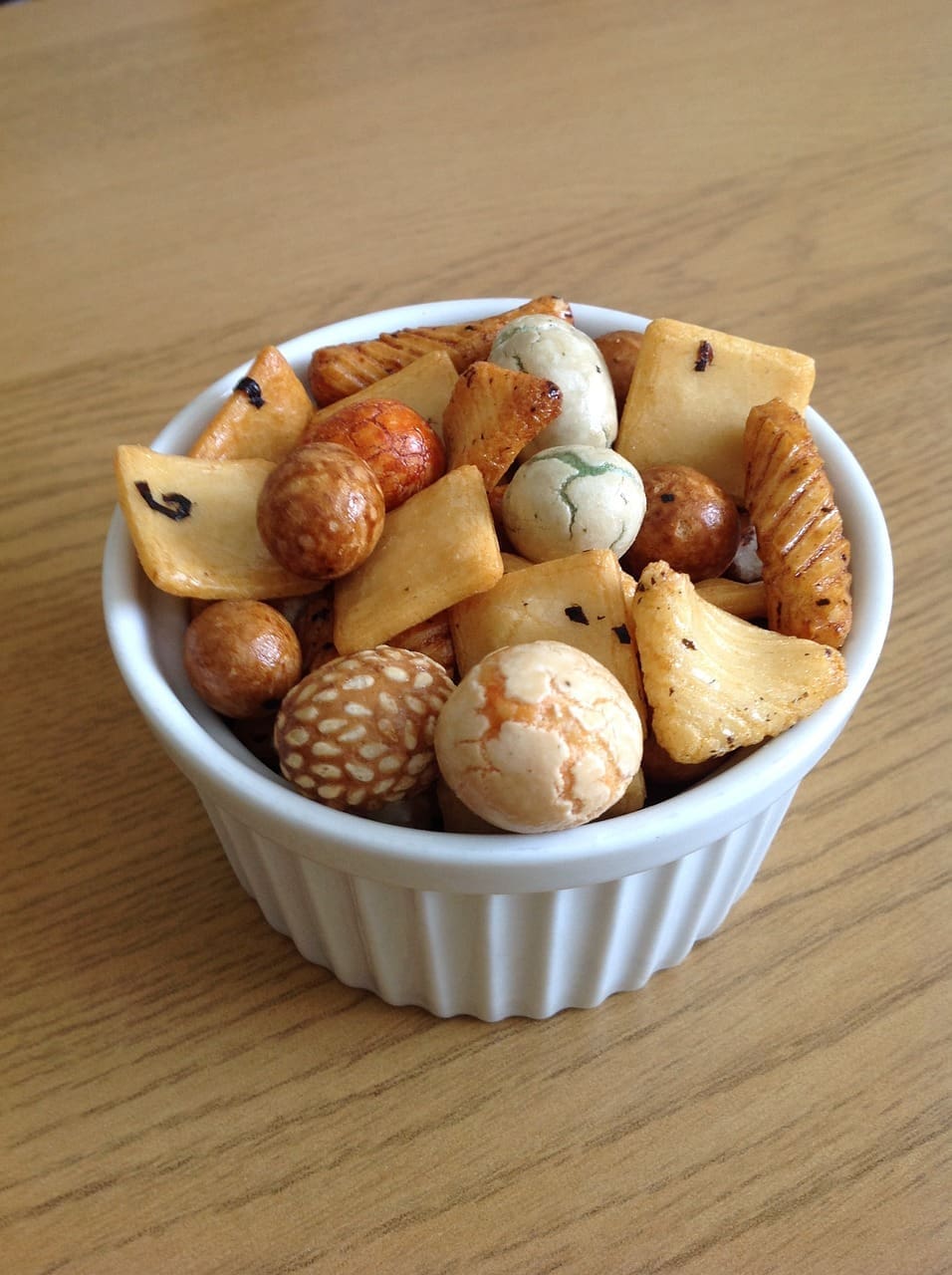
Quick answer: senbei are usually made from non-glutinous rice and tend to be crisp and firm, while okaki and arare are made from glutinous mochi rice and have a lighter, more brittle crunch. The names overlap in everyday use, but the type of rice is the clearest practical difference.
Best for first-time buyers: start with shoyu senbei for the classic savory flavor, nori-wrapped crackers for extra umami, and a small arare mix if you want to sample several textures without buying a full bag of each.
When people think of Japanese food, sushi, ramen, or tempura often steal the spotlight. But for me, one of the most underrated treasures of Japanese cuisine comes in a satisfying crunch: the world of rice crackers. Known as Senbei (煎餅) and Okaki (おかき), these humble snacks tell a story of tradition, regional pride, and flavors that span centuries.
Senbei vs. Okaki: What’s the Difference?
Both are rice crackers, but their character lies in the details:
🍘 Senbei – Usually made from uruchimai (ordinary short-grain rice). Senbei are grilled or baked, often brushed with soy sauce, sprinkled with sesame seeds, or wrapped in nori (seaweed). They’re crisp, savory, and often enjoyed with green tea.
🍘 Okaki – Made from mochi-gome (glutinous rice). These are puffier, lighter, and often deep-fried, giving them a more delicate crunch. Okaki carries a melt-in-your-mouth quality that sets it apart.
👉 Pro tip: If you’re tasting for the first time, try both side by side—you’ll instantly understand how texture transforms flavor.
Regional Flavors: A Crunchy Tour of Japan
Every part of Japan has its own take on rice crackers:
- Soka Senbei (Saitama): Perhaps the most famous, thick and soy-sauce flavored, often handmade by family-run shops.
- Kawara Senbei (Kansai): Sweet, cookie-like crackers shaped like roof tiles, a nod to temple architecture.
- Shrimp Senbei (Nagoya & Seto): Packed with umami from local seafood, pairing perfectly with beer.
- Spicy Karashi Senbei (Tohoku): A fiery twist for those who like heat with their crunch.
Every bite is like a postcard from the region it represents.

More Than a Snack: Senbei in Japanese Life
Senbei and Okaki aren’t just snacks—they’re tied to culture and tradition:
🎎 Omiyage (souvenirs) – Beautifully packaged rice crackers are among the most popular gifts to bring back from regional trips.
🍵 Tea rituals – Senbei are often served with green tea, a balance of umami and bitterness against salty crunch.
🎉 Festivals – Freshly grilled senbei on the street are festival favorites, the aroma alone pulling you in.
My Crunchy Takeaway
For me, biting into a senbei at a small shop in Soka, with the soy glaze still warm from the grill, felt like tasting history. It’s a reminder that Japanese cuisine isn’t always about elaborate meals—it’s also in the everyday snacks that families have enjoyed for generations.
So next time you’re in Japan, don’t just stop at sushi and ramen. Seek out a bag of Senbei or Okaki at a local market—or better yet, watch a master craftsman press, grill, and glaze one fresh before your eyes.
Because sometimes, the most unforgettable taste of Japan comes with a crunch.

Continue exploring Japanese food
Pair this snack guide with five traditional dishes to try in Japan, explore a sweets and sake experience, or return to the Hidden Japan guide hub.
Try rice crackers on the road
Okaki and regional snacks are easy to find while exploring the Nakasendo town of Magome-juku. For another food tradition with strong regional differences, continue to our guide to ramen across Japan.
Continue exploring: Discover more regional specialties through the Japan Food & Local Flavors hub.